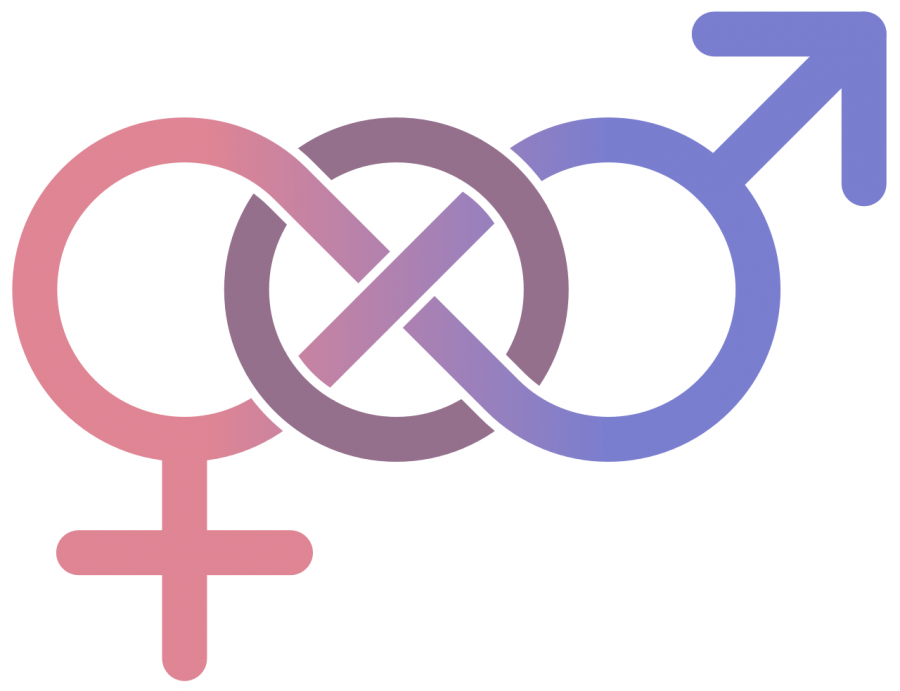
Ask most people to picture feminism, and they’ll picture a movement about women — women’s rights, women’s voices, women’s equality. That’s accurate, as far as it goes. But it also misses something that a growing number of researchers, sociologists, and even long-time skeptics have started to take seriously: many of the specific changes feminism has pushed for also directly benefit men.
Not as a side effect. Not as an afterthought. As a documented, measurable part of what the movement’s core arguments have always implied.
That claim tends to surprise people — especially men who’ve never thought of feminism as something “for” them. So let’s look at the actual case, point by point, and then look honestly at where the pushback comes from.
The Core Argument, in One Sentence
Feminism’s central claim isn’t “women should have power instead of men.” It’s that rigid gender roles limit people — and if that’s true, it should limit men too, just in different ways.
That’s the whole argument in miniature. Everything below is really just this idea, applied to different parts of life.
A quick gut-check before we go further:
Have you ever felt pressure to “man up,” hide an emotion, or avoid asking for help because it didn’t seem masculine enough? Hold onto that memory — we’ll come back to it.
1. Mental Health: The Cost of “Man Up”
Traditional masculinity comes with an unspoken rulebook: don’t cry, don’t show weakness, don’t ask for help, handle it yourself. Feminist scholars have long argued that this rulebook isn’t natural — it’s constructed, and it’s costly.
The numbers back this up in sobering ways. Men die by suicide at significantly higher rates than women in most countries worldwide, and researchers consistently point to a specific factor: men are far less likely to seek mental health support, often because doing so feels like a violation of what they’ve been taught masculinity requires.
Feminist critiques of rigid gender roles directly target this dynamic. The argument isn’t subtle: if we stop treating emotional expression and help-seeking as inherently feminine — and therefore shameful for men — men gain access to support that the current script actively discourages them from reaching for.
2. Fatherhood: From Provider to Parent
For most of the 20th century, the “ideal father” in Western culture was defined almost entirely by one function: earning money. Emotional involvement, caregiving, and daily parenting were treated as the mother’s domain by default.
Feminism’s push to expand what women could do outside the home came paired with a parallel argument that’s often overlooked: if women aren’t confined to domestic roles, men shouldn’t be confined to provider roles either. That symmetry has opened real space for a different kind of fatherhood — one increasingly reflected in policy and culture.
Paid paternity leave, once nearly nonexistent, is now standard in dozens of countries. Surveys of fathers across multiple generations show a consistent trend: each generation reports wanting deeper, more hands-on involvement in their children’s lives than the one before it. Feminism didn’t invent men’s desire to be present fathers — but it helped dismantle the assumption that caregiving is fundamentally unmasculine, which had long stood in the way.
3. Relationships: Renegotiating an Old, Rigid Script
Traditional gender roles didn’t just assign women a script — they assigned men one too, and it was just as narrow: be the provider, be strong, initiate everything, never show vulnerability, never need anything.
Feminist relationship research has increasingly focused on mutuality — partnerships built on shared emotional labor, shared financial responsibility, and shared decision-making, rather than rigid, assigned roles. For men, this cuts both ways in genuinely liberating fashion: it reduces the crushing weight of being the sole financial provider, and it creates room for men to receive emotional support in a relationship, not just provide stability for someone else.
Reflect on this:
In your own relationships or the ones you’ve observed, who tends to carry the “someone has to be strong all the time” burden — and what would change if that pressure were more evenly shared?
4. Workplace Flexibility: A Two-Way Street
Feminism’s fight for equal pay and equal opportunity is well known. Less discussed is how the same fight has reshaped norms around flexibility, family leave, and work-life balance in ways that benefit everyone — including men who never asked for the old system in the first place.
When workplaces are pressured to accommodate employees with caregiving responsibilities, they can’t easily maintain a policy that only applies to women without inviting obvious legal and ethical problems. So the accommodations tend to become general: flexible schedules, parental leave open to any parent, cultural permission to prioritize family without career penalty. Men benefit from infrastructure feminism built the case for — even when they aren’t the ones who had to fight the original battle.
5. Freedom From the “Toxic” Parts of Masculinity — Not From Masculinity Itself
This is worth being precise about, because it’s the point most often misunderstood. Feminist critiques of masculinity generally aren’t arguments that men should stop being men, or that traditionally masculine traits are inherently bad. The more common argument is narrower: certain specific expectations — suppressing emotion entirely, equating self-worth with dominance, treating vulnerability as weakness — are harmful, optional, and worth discarding, while traits like confidence, strength, and ambition aren’t the problem at all.
Framed that way, the invitation isn’t “stop being masculine.” It’s “you get to keep what actually serves you, and let go of the parts that were quietly making your life harder.”
So Why Doesn’t It Feel That Way to Everyone?
If the case above is accurate, a fair question follows: why do so many men feel like feminism is aimed at them rather than for them, at least in part?
There are a few honest answers worth sitting with.
Some critiques of feminism argue it hasn’t gone far enough for men. Scholars in the men’s rights and men’s studies space — not always aligned with mainstream feminism — point out real gaps: family courts that still default to mothers in custody disputes, workplace norms that still penalize men who take parental leave in practice even when it’s offered on paper, and a cultural conversation about gender that, they argue, spends far more energy on women’s constraints than men’s.
Some men experience feminist spaces as excluding or blaming them individually, even when the underlying critique is aimed at systems and norms, not individuals. Whether that’s a communication failure, a real pattern in certain corners of the movement, or a defensive reaction to legitimate critique is genuinely contested — and different people arguing in good faith land in different places on it.
Change is uneven and slow, and lived experience often lags behind research and policy. A father might have legal access to parental leave while still facing real workplace stigma for using it. A man might intellectually agree that emotional openness is healthy while still feeling the old script’s pull in an actual moment of crisis. The gap between “this should help men” and “this currently, tangibly helps me” is real, and dismissing that gap doesn’t make it disappear.
There’s also a straightforward political disagreement here. Some critics argue that framing feminism as beneficial to men is a rhetorical move designed to make the movement more palatable, rather than a genuine reflection of its priorities — and that feminism’s primary and appropriate focus should remain squarely on addressing disparities that disproportionately affect women, without needing to justify itself in terms of what men gain.
The Honest Middle Ground
The most defensible version of this argument isn’t “feminism was secretly about men all along.” It’s narrower and more grounded: many specific changes feminism has pushed for — around mental health stigma, fatherhood, relationship expectations, and workplace norms — produce measurable benefits for men, even though the movement’s central focus, correctly, remains on addressing inequalities that affect women.
Those two things aren’t in tension. A movement can be primarily about one group’s constraints while still loosening the rigid rules imposed on everyone. That’s arguably one of the most surprising features of dismantling a rigid system: it’s rarely surgical. Loosen the grip on one group’s expected role, and the grip on the other group’s role tends to loosen too, because the two roles were always defined in relation to each other.
One last question worth sitting with:
If the old rulebook said women couldn’t be ambitious and men couldn’t be vulnerable — and one half of that rule is being dismantled — what happens to the other half?
Final Thought
Whether feminism “benefits men” isn’t really a yes-or-no question — it’s a question of which specific claims you’re evaluating, and which parts of the broader debate you find convincing. The mental health, fatherhood, and workplace flexibility arguments rest on real data. The critiques — that progress has been uneven, that some men still feel unheard, that the framing itself is contested — rest on real experience and real disagreement too.
What’s harder to dispute is the underlying mechanism: rigid gender expectations constrain more than one group at a time. Loosening them tends to ripple further than the people who first pushed for the change ever expected.
💬 What’s your honest reaction — does this change how you think about the relationship between feminism and men’s lives, or does it leave out something important? Share your perspective below.
Read more Interesting Reads here