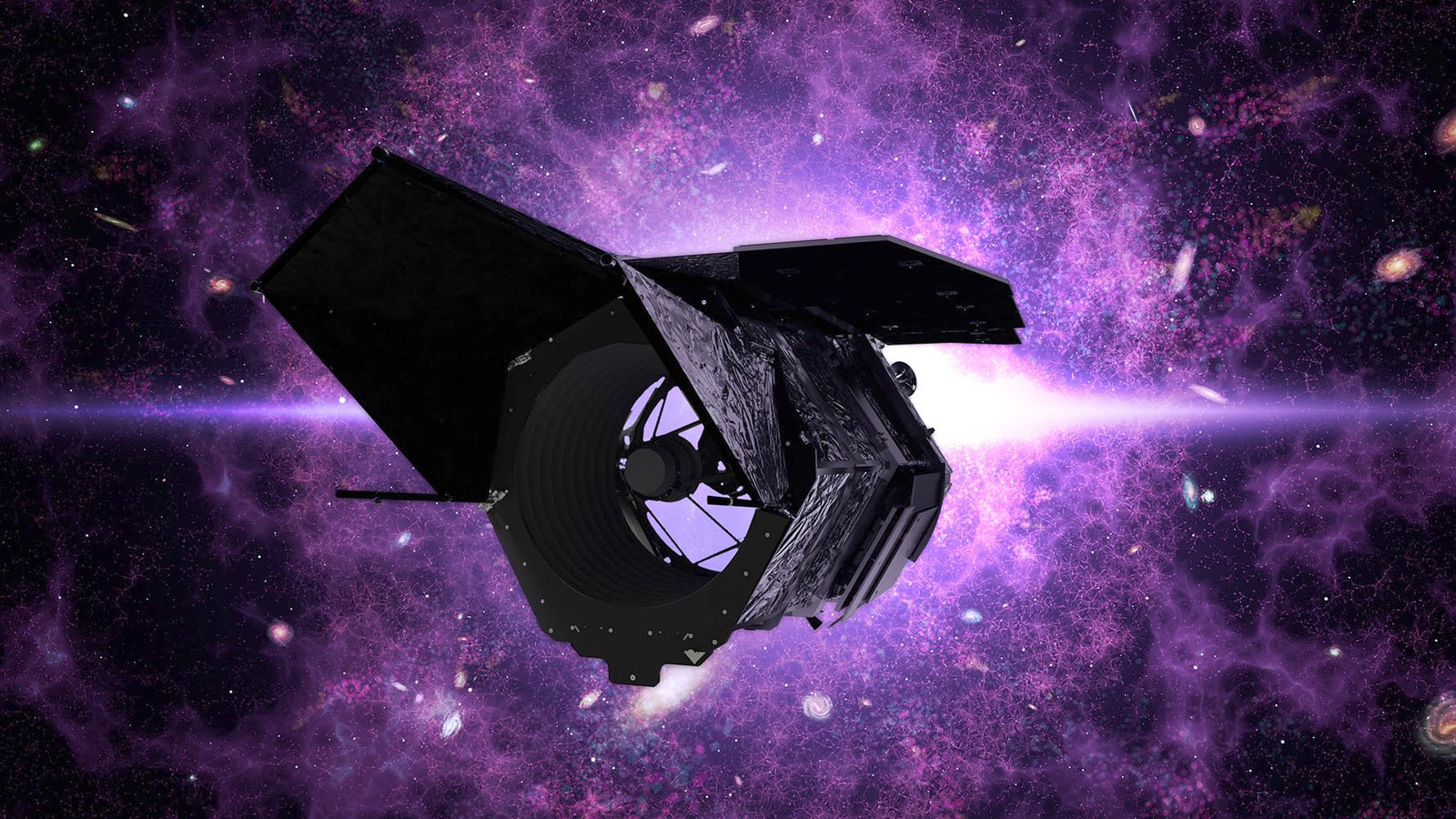
A powerful new eye on the universe is now on its way to space.
NASA’s Nancy Grace Roman Space Telescope successfully launched on August 30, 2026, marking a major milestone in the agency’s effort to understand some of the biggest mysteries in the cosmos.
The space observatory lifted off at 7:26 a.m. EDT aboard a SpaceX Falcon Heavy rocket from Launch Complex 39A at NASA’s Kennedy Space Center in Florida. Shortly afterward, Roman separated from the rocket’s second stage and began its journey toward its destination nearly 1 million miles (1.5 million kilometers) from Earth.
And this isn’t simply another space telescope.
Roman is designed to survey enormous portions of the sky and investigate questions surrounding dark energy, dark matter, exoplanets, galaxies and the evolution of the universe.
🚀 A Successful Launch for NASA’s Next Great Space Observatory
The launch represents years of engineering, testing and preparation.
After liftoff, the Falcon Heavy completed a series of critical ascent milestones. The rocket’s side boosters separated, the upper stage took over, and the spacecraft eventually separated from the second stage.
NASA reported that Roman established communications through the agency’s Tracking and Data Relay Satellite system during ascent. At approximately 7:57 a.m. EDT, the telescope separated from the Falcon Heavy’s second stage and began flying independently.
For mission controllers, this was a crucial transition.
The telescope is now entering the next phase of its journey: reaching its operational orbit and preparing its sophisticated scientific instruments.
🌌 Why Is the Roman Space Telescope So Important?
The universe is unimaginably large.
Even our most powerful telescopes can observe only portions of it at a time. Roman is designed to change the scale at which astronomers can conduct large astronomical surveys.
According to NASA, Roman will have a field of view at least 100 times larger than Hubble’s while maintaining comparable sensitivity and infrared resolution. NASA says the telescope could potentially measure light from a billion galaxies over its lifetime.
That combination of wide coverage and high sensitivity could allow scientists to study enormous populations of cosmic objects rather than focusing primarily on individual targets.
Think of it this way:
Hubble is like a powerful telephoto camera. Roman is designed to give astronomers an enormous panoramic view of the universe.
That difference could unlock discoveries that are difficult—or impossible—to make with narrower-field observations.
🕵️♀️ Roman Will Hunt for Clues About Dark Energy
One of Roman’s most ambitious goals is investigating dark energy, the mysterious phenomenon associated with the accelerating expansion of the universe.
Scientists know that the universe has been expanding, but the details of what is driving its increasingly rapid expansion remain one of modern cosmology’s biggest unanswered questions.
Roman will conduct large-scale surveys that can help scientists investigate how the universe has changed over cosmic history.
By observing huge numbers of galaxies and other astronomical objects, researchers hope to improve our understanding of how the universe evolved—and potentially uncover clues about the nature of dark energy.
🌑 What About Dark Matter?
Dark matter is another major mystery.
Unlike ordinary matter, dark matter does not appear to interact with light in the way familiar objects do. Yet astronomers infer its existence from its gravitational influence.
Roman’s observations will help scientists map the distribution of matter across the universe and investigate how dark matter has influenced the formation and evolution of cosmic structures.
This matters because galaxies don’t exist in isolation.
They are embedded in an enormous cosmic web shaped by gravity, matter and dark matter.
Roman’s wide-field observations could provide researchers with a much larger dataset for studying that structure.
🔭 Roman Isn’t Just About the Distant Universe
While dark energy and dark matter are central scientific objectives, Roman’s mission reaches much closer to home.
The telescope will also investigate exoplanets—planets orbiting stars beyond our Sun.
NASA says Roman will be capable of conducting a statistical census of planetary systems in our galaxy and will use techniques that can reveal planets that are difficult to detect using conventional methods.
That could help answer a fascinating question:
How common are planetary systems like our own?
Instead of finding only a handful of interesting exoplanets, Roman could help scientists understand planetary populations on a much broader scale.
🪐 A Telescope That Can Block Starlight
One of Roman’s particularly exciting technologies is its ability to suppress the glare of stars.
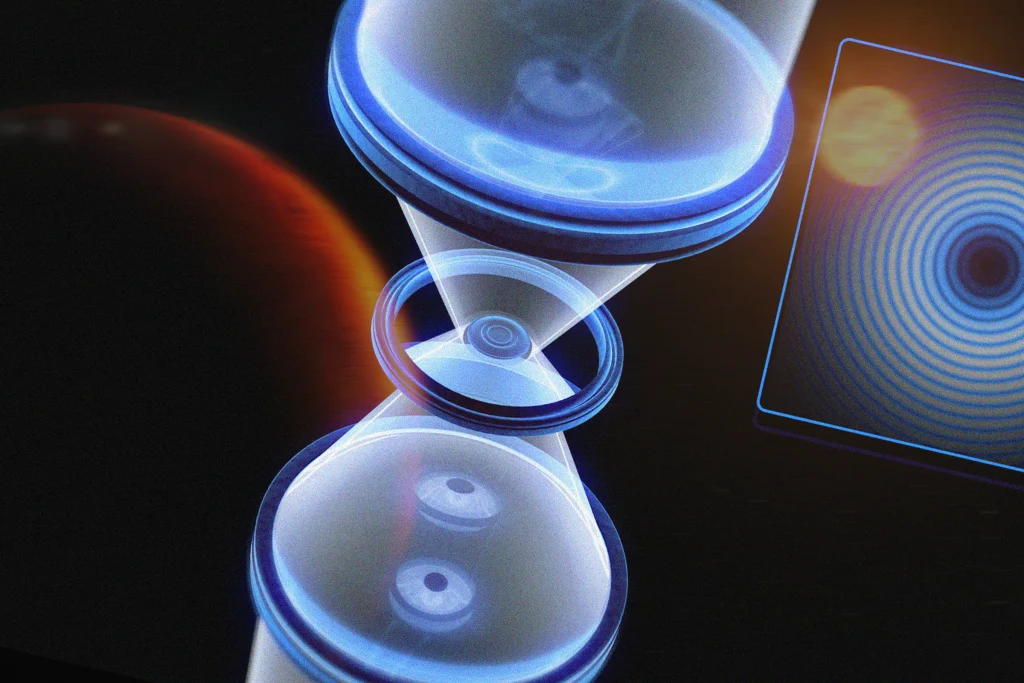
Its coronagraph instrument is designed to block or reduce starlight, making it easier to observe faint objects near bright stars.
This technology could eventually help astronomers directly study some exoplanets and planet-forming disks.
The ability to separate faint planetary signals from the overwhelming brightness of their host stars is one of the major technical challenges in exoplanet astronomy.
Roman will provide an important testing ground for these advanced techniques.
📸 How Will Roman Compare With Hubble?
The Nancy Grace Roman Space Telescope isn’t designed to simply replace Hubble.
Instead, the two observatories are expected to complement each other.
Hubble has produced some of the most iconic astronomical images ever captured, often concentrating on relatively small areas of the sky in extraordinary detail.
Roman is designed for wide-field surveys, allowing astronomers to cover much larger regions of the universe.
NASA estimates that Roman could survey the sky up to 1,000 times faster than Hubble while maintaining similar sensitivity and infrared resolution.
That speed could be transformative.
Astronomers could use Roman to identify interesting objects and large-scale patterns and then use other observatories—including Hubble and the James Webb Space Telescope—to investigate selected targets in greater detail.
📍 Where Is Roman Going?
After separating from the Falcon Heavy, Roman began its journey toward the second Sun-Earth Lagrange point, known as L2.
L2 is located roughly 1 million miles from Earth.
This region of space provides an advantageous environment for astronomical observatories because a spacecraft can maintain a stable relationship with Earth and the Sun while operating in a carefully controlled orbit.
NASA says Roman’s journey, deployments, activations, calibrations and testing are part of an approximately three-month commissioning period.
So although the launch has succeeded, the mission is only beginning.
☀️ Roman Has an Important Shield
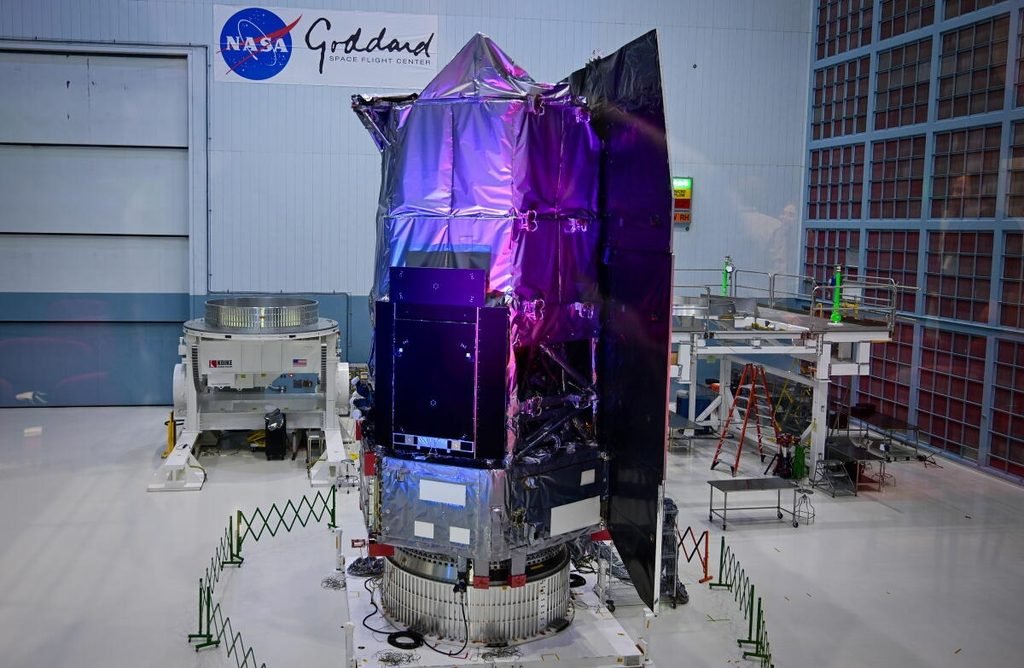
One of the spacecraft’s early deployment tasks involves its Solar Array Sun Shield.
The structure performs two important jobs: generating power through its solar arrays while also helping keep the observatory’s sensitive components cool.
After separation, Roman’s outer panels were scheduled to deploy to form the full array as the spacecraft began its independent journey.
For a sophisticated infrared observatory, controlling temperature is essential.
Even small amounts of unwanted heat can interfere with observations of faint infrared signals coming from distant objects.
🔬 What Could Roman Discover?
This is perhaps the most exciting question—and one that scientists cannot answer yet.
Roman’s primary mission objectives are well defined, but astronomy has a long history of unexpected discoveries.
A telescope designed to study one phenomenon can reveal something completely different.
Roman could potentially uncover:
- Previously unknown exoplanets
- New clues about dark matter
- Better measurements of dark energy
- Previously unseen galaxies
- New information about how galaxies formed
- Unexpected stellar populations
- New planetary systems
- Objects and phenomena that scientists haven’t predicted
Its enormous survey capability means the telescope will generate an extraordinary amount of astronomical data.
And sometimes, the most important discoveries are the ones researchers weren’t looking for.
🌠 A Billion Galaxies—and a Universe Full of Questions
One of the most astonishing aspects of Roman’s mission is its scale.
NASA says the telescope could potentially measure light from a billion galaxies during its lifetime.
Imagine attempting to understand a city by studying a few buildings.
You might learn a lot—but your conclusions could change dramatically if you could examine the entire city.
Roman takes a similar approach to the universe.
By observing vast numbers of galaxies, stars and other cosmic objects, scientists can search for patterns that would be difficult to recognize from small samples.
Those patterns could help reveal how the universe behaves on its largest scales.
👩🚀 Who Was Nancy Grace Roman?
The telescope carries the name of Nancy Grace Roman, one of NASA’s pioneering astronomers and the agency’s first chief astronomer.
Roman played a major role in establishing NASA’s space astronomy programs and helped lay the groundwork for what eventually became the Hubble Space Telescope.
She is often remembered as the “mother of the Hubble Space Telescope” because of her leadership and advocacy for space-based astronomy.
Naming NASA’s next major space observatory after her connects the mission to a legacy of pushing astronomy beyond Earth’s atmosphere.
🔭 What Happens Next?
The successful launch was a major achievement—but mission teams now face another critical period.
Over the coming weeks and months, engineers and scientists will:
- Guide Roman toward its destination near L2.
- Deploy and configure spacecraft systems.
- Activate scientific instruments.
- Test communications and spacecraft systems.
- Calibrate the telescope.
- Verify the observatory’s performance.
- Prepare it for scientific observations.
Only after this commissioning process will Roman be ready to begin its primary scientific mission.
🌌 A New Chapter in Space Exploration
The launch of NASA’s Nancy Grace Roman Space Telescope represents more than another successful rocket launch.
It represents a new way of looking at the universe.
Hubble changed humanity’s view of the cosmos. James Webb has opened new windows into the infrared universe. Roman is designed to take another giant step by surveying enormous areas of the sky at unprecedented speed and scale.
Its mission could help scientists address some of the biggest questions in modern astronomy:
What is dark energy?
What is dark matter?
How did galaxies evolve?
How common are planetary systems?
And what else is hiding in the vastness of space?
Roman has now begun its journey.
The telescope is heading toward L2, its instruments will soon come alive, and astronomers around the world are waiting for the data.
The next great cosmic discovery may already be somewhere in the sky.
We just need the right telescope to find it.
Frequently Asked Questions
When did NASA’s Nancy Grace Roman Space Telescope launch?
NASA’s Nancy Grace Roman Space Telescope successfully launched on August 30, 2026, at 7:26 a.m. EDT aboard a SpaceX Falcon Heavy rocket from Kennedy Space Center in Florida.
Where is the Roman Space Telescope going?
Roman is traveling toward the second Sun-Earth Lagrange point, or L2, approximately 1 million miles from Earth.
What will the Roman Space Telescope study?
Its major science goals include studying dark energy, dark matter, exoplanets, galaxies and infrared astrophysics.
Is Roman replacing the Hubble Space Telescope?
No. Roman is designed to complement Hubble and other observatories. Its particularly wide field of view will allow it to conduct large surveys of the universe much faster than Hubble.
Why is the Roman Space Telescope important?
Roman will combine a very wide field of view with high sensitivity, enabling scientists to survey enormous numbers of cosmic objects and investigate some of the most important unanswered questions about the universe.
Sources: NASA, NASA Science, and the Nancy Grace Roman Space Telescope mission updates. This article was updated to reflect the telescope’s successful August 30, 2026 launch.
Read more Space Updates here