You’re sleeping eight hours but waking up exhausted. Your midsection has thickened despite no real change in diet. You’re irritable over things that never used to bother you, and somehow you’re both wired and tired at the same time.
If this sounds familiar, cortisol might be part of the story.
Cortisol is often labeled “the stress hormone,” but that’s a bit of an oversimplification. It’s actually one of the most important hormones in your body — it regulates blood sugar, controls inflammation, manages blood pressure, and helps you wake up in the morning. The problem isn’t cortisol itself. It’s what happens when your body produces too much of it, for too long, without a break.
Here’s what chronically high cortisol can actually feel like — and which signs are worth paying attention to.
What Is Cortisol, Exactly?
Cortisol is produced by your adrenal glands, two small organs sitting on top of your kidneys, as part of your body’s central stress-response system — often called the HPA axis (hypothalamic-pituitary-adrenal axis).
In short bursts, cortisol is helpful. It’s the hormone that helped your ancestors outrun predators, and it’s the same one that gets you moving when a deadline is bearing down. Under normal conditions, cortisol follows a predictable daily rhythm: it peaks shortly after you wake up to help you feel alert, then gradually tapers off throughout the day, reaching its lowest point at night so your body can rest.
The trouble starts when that rhythm breaks down — when cortisol stays elevated for weeks or months instead of spiking and settling. That’s when the body starts to show it.
1. Persistent Fatigue That Sleep Doesn’t Fix
One of the most common — and most confusing — signs of high cortisol is exhaustion that doesn’t improve with rest.
This happens because chronically elevated cortisol disrupts your natural energy rhythm. Instead of feeling alert in the morning and winding down at night the way your body is designed to, the pattern flattens or flips: some people feel foggy and drained during the day but “tired and wired” at night, unable to fully relax even though they’re running on empty.
If you’re getting adequate sleep but still feel like you’re operating at 60%, it’s worth looking at your stress load, not just your sleep habits.
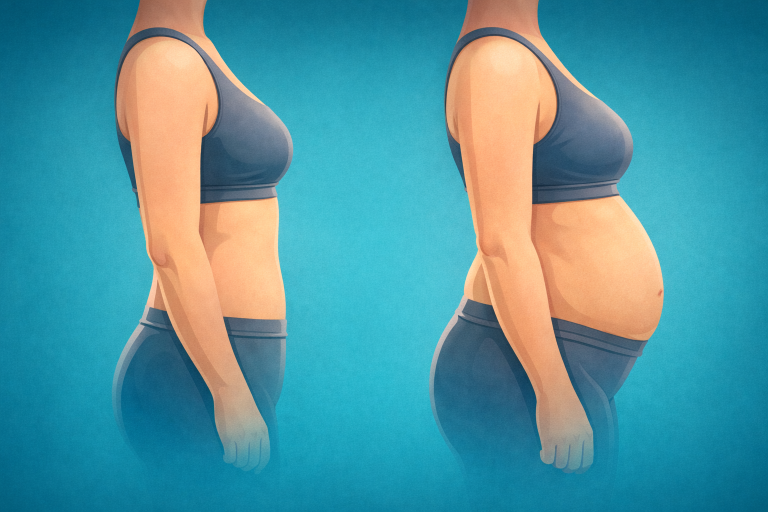
2. Stubborn Weight Gain, Especially Around the Midsection
Cortisol plays a direct role in how your body stores fat. When levels stay elevated, the body tends to favor storing fat viscerally — deep around the abdominal organs — rather than distributing it evenly.
This is sometimes referred to informally as a “cortisol belly,” and it can be frustrating precisely because it often doesn’t respond to the usual combination of diet and exercise the way other weight changes do. That’s because the underlying driver isn’t calories — it’s hormonal signaling that’s telling your body to hold on to fat as a protective reserve.
Elevated cortisol can also increase cravings for high-sugar, high-fat “comfort foods,” which compounds the issue further.
3. Sleep That Feels Broken or Shallow
Since cortisol is supposed to be lowest at night, chronically high levels can directly interfere with your ability to fall — and stay — asleep.
Common patterns include:
- Difficulty falling asleep despite feeling exhausted
- Waking up in the middle of the night, often between 2–4 AM, for no obvious reason
- Waking up feeling like you never fully rested, even after 7–8 hours
This creates a frustrating cycle: poor sleep raises cortisol further, and elevated cortisol makes good sleep harder to come by.
4. Increased Anxiety, Irritability, or a Short Fuse
Cortisol doesn’t just affect the body — it has a direct relationship with brain chemistry and mood regulation.
When cortisol stays high, many people notice:
- A persistent sense of unease or dread, even when nothing specific is “wrong”
- Irritability over minor inconveniences
- Feeling emotionally reactive or on edge
- A general sense of being unable to relax, even during downtime
This doesn’t mean high cortisol causes anxiety in a simple, direct way — the relationship runs in both directions, and stress and cortisol tend to feed each other. But if your emotional baseline has shifted toward more tension and less patience, cortisol is a reasonable thing to consider.
5. Brain Fog and Trouble Concentrating
Chronically elevated cortisol has been linked to difficulty with memory, focus, and mental clarity. People often describe this as feeling like they’re “thinking through fog” — struggling to find words, losing their train of thought, or needing to re-read the same paragraph multiple times.
This tends to make sense biologically: cortisol affects the hippocampus, a brain region closely tied to memory and learning, and prolonged elevation can interfere with how well it functions.
6. Frequent Illness or Slow Recovery
Cortisol plays an important role in regulating the immune system — in short bursts, it actually helps dampen excessive inflammation. But when it’s chronically elevated, that regulation breaks down, and immune function can become suppressed over time.
Signs this might be happening include:
- Catching colds or infections more often than usual
- Wounds or minor injuries healing more slowly
- Feeling like you’re “always fighting something off”
7. Digestive Issues
The gut is highly sensitive to stress hormones, which is part of why so many people notice digestive changes during stressful periods.
High cortisol has been associated with:
- Bloating and general stomach discomfort
- Changes in bowel habits
- Worsening of existing digestive conditions like IBS
This connection runs through the gut-brain axis, a well-documented communication pathway between your digestive system and your central nervous system.
8. Changes in Blood Pressure or Heart Rate
Because cortisol helps regulate blood pressure as part of the body’s stress response, chronically high levels can keep blood pressure elevated even when you’re not in an acute stressful moment. Some people also notice a resting heart rate that feels slightly faster than normal, or a sense of their heart “racing” during otherwise calm moments.
This is one of the signs worth taking seriously enough to mention to a doctor, since long-term elevated blood pressure carries its own independent health risks.
9. Skin Changes
Cortisol affects collagen production and skin repair. Over time, chronically high levels have been associated with:
- Thinning skin
- Slower healing of blemishes or minor skin irritation
- Increased acne, in some cases, due to increased oil production
- A puffy or rounded appearance in the face, sometimes referred to informally as “moon face” in more severe, prolonged cases
10. Irregular Menstrual Cycles or Changes in Libido
Cortisol and reproductive hormones are closely linked, because the body treats chronic stress as a signal that conditions aren’t safe for reproduction. In practice, this can show up as:
- Irregular or missed menstrual cycles
- Reduced libido
- Worsened PMS symptoms
When These Signs Point to Something More Serious
Most of the signs above are associated with everyday chronic stress — the cumulative kind that builds from work pressure, poor sleep, and an overloaded schedule rather than a distinct medical condition.
However, a small number of people have a genuine medical disorder involving excess cortisol production, most notably Cushing’s syndrome. This is a distinct, diagnosable condition — not simply “a lot of stress” — and it typically involves a more pronounced combination of symptoms, such as significant weight gain in the face and upper body, purple stretch marks, muscle weakness, and more severe changes in skin and blood pressure.
If your symptoms feel severe, are progressively worsening, or don’t improve despite obvious efforts to manage stress, it’s worth speaking with a doctor. Cortisol levels can be measured through blood, saliva, or urine tests, and a healthcare provider is the only reliable way to determine whether what you’re experiencing reflects everyday chronic stress or something that needs targeted medical treatment.
The Bottom Line
High cortisol rarely announces itself with a single, obvious symptom. Instead, it tends to show up as a collection of smaller, easy-to-dismiss changes — fatigue that sleep doesn’t fix, stubborn weight around the middle, a shorter temper, foggier thinking, a gut that’s more sensitive than usual.
Individually, any one of these could be explained away. Together, especially during a prolonged stretch of high stress, they form a pattern worth paying attention to — not as something to panic about, but as useful information your body is giving you.
This article is for informational purposes only and isn’t a substitute for professional medical advice. If you’re concerned about your cortisol levels or experiencing several of these symptoms together, consult a healthcare provider for proper testing and guidance.
💬 Have you noticed any of these signs during periods of high stress in your own life? Share your experience below.
Read more fitness updates here