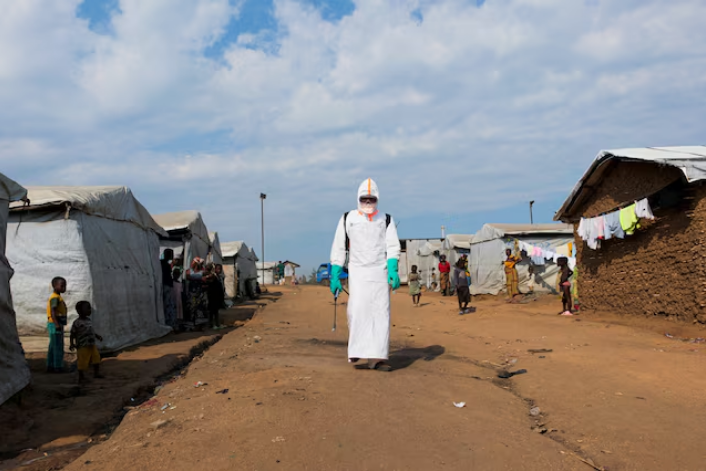
The Democratic Republic of the Congo (DRC) is confronting the deadliest epidemic in its history as the death toll from a fast-moving Ebola outbreak officially surpassed 3,000. Data released by the Ministry of Health and the National Institute of Public Health confirmed 3,007 fatalities out of 6,186 reported cases, making this the fastest-spreading Ebola outbreak ever recorded.
First declared in Ituri province, the virus has expanded across multiple provinces in central and eastern DRC. The crisis has eclipsed the country’s previous 2018–2020 epidemic, becoming the second-largest global outbreak on record behind the 2014–2016 West Africa epidemic.
Outbreak Key Statistics
- Confirmed Cases: 6,186 total reported infections since official declaration.
- Fatalities: 3,007 verified deaths, with approximately 60% occurring outside healthcare facilities.
- Recoveries: 1,409 patients successfully treated and discharged.
- Causative Pathogen: The rare Bundibugyo species of Ebola virus.
- Geographic Spread: Active transmission documented across six provinces.
The Threat of the Bundibugyo Strain
Unlike previous major epidemics in the DRC caused by the Zaire strain, the current surge is driven by the rarer Bundibugyo species. The primary operational hurdle facing responders is the lack of specific, approved medical countermeasures.
Existing licensed Ebola vaccines—such as Merck’s Ervebo—and proven monoclonal antibody treatments were developed specifically to target the Zaire virus variant. While health authorities have initiated emergency vaccination for frontline healthcare workers using Ervebo in hopes of partial cross-protection, specialized vaccines and therapeutics for the Bundibugyo strain remain in clinical trial phases.
+--------------------------------------------------------------------------+
|                     EBOLA STRAIN COMPILATION & RESPONSE IMPACT           |
+--------------------------------------------------------------------------+
|                                                                          |
|  ZAIRE STRAIN (Historical Epidemics)    BUNDIBUGYO STRAIN (Current 2026) |
|  -----------------------------------    -------------------------------- |
|  - Licensed Ervebo vaccine available    - No approved specific vaccine   |
|  - Proven monoclonal antibody treatments- Experimental candidate trials  |
|  - High case fatality rate (50-90%)     - Fast transmission speed observed|
|  - Known deployment protocols           - Cross-protection testing under |
|                                           way using Ervebo               |
|                                                                          |
+--------------------------------------------------------------------------+
Factors Accelerating Viral Transmission
Responders from the World Health Organization (WHO), aid organizations, and national health authorities face severe operational barriers:
- Active Armed Conflict: Persistent violence by non-state armed groups in eastern provinces hampers access to high-transmission zones and disrupts contact tracing.
- Community Displacement & Mobility: Mobile populations, including transient mining workers and families fleeing regional insecurity, move frequently across internal borders.
- High Community Mortality: An estimated 60% of deaths occur at home rather than inside specialized treatment centers, increasing household exposure during caregiving and traditional burial practices.
- School Resumption Risks: The reopening of academic institutions amid widespread transmission has created heightened risks of classroom exposure.
- Infrastructural Deficits: Saturated isolation centers, shortages of personal protective equipment (PPE), and weak surveillance capabilities limit early identification.
International Response and Emergency Priorities
Containing the outbreak requires urgent global coordination focused on three primary areas:
- Expanding Clinical Trials: Accelerating phase-two and phase-three clinical trials for candidate vaccines and therapeutic treatments targeting the Bundibugyo strain.
- Strengthening Isolation Centers: Deploying field hospitals equipped with adequate bio-containment equipment to process suspected cases and keep community transmission low.
- Community Engagement: Working alongside local leaders to build trust, dispel misinformation, facilitate early reporting, and promote safe burial protocols.
The Ebola outbreak in the Democratic Republic of Congo has crossed a devastating new milestone, with more than 3,000 people reported dead, according to the latest government figures. The rapidly spreading outbreak has become the deadliest Ebola epidemic in the country’s history, raising serious concerns about the ability of health authorities and international partners to contain the disease.
More than 6,100 confirmed cases have been reported, according to the latest data. The outbreak is concentrated mainly in northeastern Congo, where insecurity, limited healthcare infrastructure and difficulties reaching vulnerable communities are making the response increasingly challenging.
Congo Ebola Outbreak Reaches Critical Level
The latest death toll marks a major escalation in the Congo Ebola outbreak. The current epidemic has now surpassed the country’s previous worst Ebola crisis, which occurred between 2018 and 2020 and caused around 2,300 deaths.
The outbreak is being driven by the Bundibugyo species of Ebola virus, a relatively rare strain. Health authorities face additional difficulties because there is currently no approved vaccine or treatment specifically available for this strain.
The high fatality rate and rapid growth in infections have increased pressure on authorities to expand surveillance, testing, treatment and community-based prevention efforts.
Disease Spreads Across Northeastern Congo
The outbreak began in Ituri province and has expanded into several other provinces. Health officials are particularly concerned about transmission in areas where people have limited access to medical facilities.
Conflict and insecurity have complicated efforts to track infected people and identify those who may have been exposed. Medical teams also face difficulties traveling to affected communities, while displacement can make contact tracing considerably harder.
The situation demonstrates how public-health emergencies can become more dangerous when they occur in areas already struggling with violence, poverty and weak infrastructure.
Why Ebola Is So Difficult to Contain
Ebola is a highly dangerous viral disease that can cause severe illness and death. Transmission can occur through direct contact with the blood or bodily fluids of an infected person or someone who has died from the disease.
Containing an outbreak therefore requires rapid identification of cases, isolation of patients, monitoring of contacts and safe management of burials.
Funeral practices can present a particular challenge. Traditional ceremonies may involve close contact with the body of a deceased person, creating opportunities for further transmission. Health teams have to work closely with families and community leaders to encourage safer burial procedures while respecting local customs.
Public trust is equally important. Misinformation and fear can discourage people from seeking medical care or cooperating with health workers, allowing infections to spread unnoticed.
Health Workers Face Major Challenges
Medical workers are at the center of the response, but they face significant risks and operational difficulties.
Treatment centers require protective equipment, trained personnel, laboratories and reliable transportation. Health teams must also maintain infection-control procedures to prevent the virus from spreading inside medical facilities.
Security is another concern. Attacks and instability in affected areas can disrupt vaccination, testing and contact-tracing operations.
In addition, health workers have raised concerns about working conditions and support. Any prolonged disruption to medical services could weaken the broader healthcare system, leaving communities vulnerable not only to Ebola but also to other diseases.
International Support Increases
The worsening crisis has attracted international assistance. The United Kingdom announced more than £50 million in additional funding to support efforts to contain the outbreak, highlighting the growing international concern over the scale of the epidemic.
International organizations and health agencies are supporting surveillance, diagnostics, treatment and community engagement. Such assistance is particularly important because Congo’s affected regions require large logistical operations to reach patients and monitor people who may have been exposed.
The international response is also aimed at preventing the outbreak from spreading beyond Congo’s borders.
Vaccine and Treatment Concerns
One of the biggest challenges is the nature of the virus causing the current epidemic. Existing Ebola vaccines have been developed primarily against other Ebola species.
The Ervebo vaccine, which has been highly useful during outbreaks involving the Zaire species, has begun to be distributed among some frontline health workers. However, it does not provide the same established protection against the Bundibugyo virus responsible for the current Congo outbreak.
Researchers and health authorities therefore face an urgent need to improve prevention and treatment options specifically for the strain involved in the current epidemic.
Communities Remain at Risk
The impact of the outbreak extends far beyond the number of confirmed cases and deaths. Families can face separation, economic hardship and fear when communities are affected by Ebola.
Schools and businesses can also be disrupted as authorities introduce measures designed to reduce transmission. The reopening of schools has created additional concerns because children, teachers and families can come into contact with one another in crowded environments.
Maintaining public communication is therefore essential. People need clear information about symptoms, transmission, prevention and where to seek medical assistance.
Congo Ebola Outbreak Could Become a Wider Regional Threat
The scale and speed of the Congo Ebola outbreak have raised concerns about its potential regional impact. Neighboring countries may strengthen border surveillance and health monitoring to detect possible imported cases.
However, health experts emphasize that border controls alone cannot stop Ebola. Effective containment depends on controlling transmission inside affected communities.
That requires sustained funding, rapid testing, trained healthcare workers, reliable contact tracing and cooperation from local residents.
What Happens Next?
The immediate priority for Congo’s authorities is to slow the rate of new infections and bring the outbreak under control. Reaching isolated communities will be particularly important as health teams attempt to identify undetected cases.
The government and international partners will also need to maintain support for treatment centers, laboratories and frontline workers.
The latest figures show the enormous scale of the challenge. With more than 3,000 deaths and over 6,100 confirmed cases, the Congo Ebola outbreak has already become a historic public-health crisis.
Stopping the epidemic will require more than emergency medical intervention. It will depend on security, community trust, international funding and sustained healthcare operations. As the outbreak continues, the coming weeks will be critical in determining whether authorities can finally reverse the rapid spread of Ebola across northeastern Congo.
Read more Shocking News here