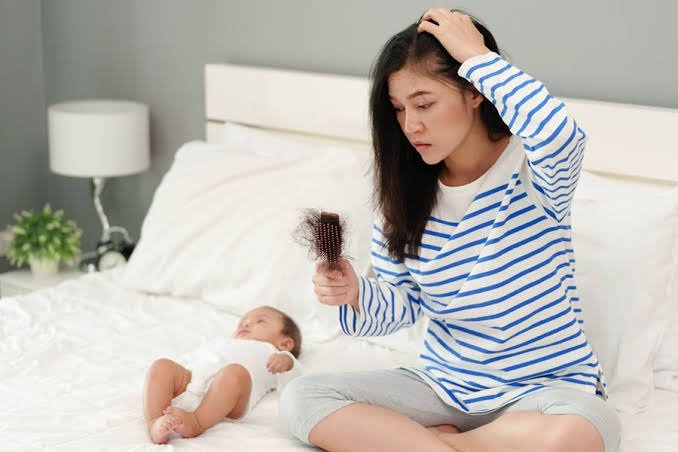
Having a baby is a life-changing experience, but the months after childbirth can bring some unexpected changes—including noticeably more hair falling out.
You may see strands on your pillow, in the shower drain, or on your hairbrush. For some new mothers, hair can appear thinner around the hairline or part. Although postpartum hair loss can be alarming, it is usually temporary and related to normal hormonal changes after pregnancy.
The good news? In most cases, your hair gradually returns to its usual growth cycle.
What Is Postpartum Hair Loss?
Postpartum hair loss, medically known as postpartum telogen effluvium, is a temporary type of excessive hair shedding that can occur after childbirth.
During pregnancy, elevated estrogen levels keep more hairs in the active growth phase. As a result, many women notice thicker, fuller-looking hair during pregnancy.
After delivery, hormone levels—including estrogen—fall significantly. Hair that remained in the growth phase during pregnancy can then enter the resting and shedding phase.
This means you aren’t necessarily losing hair that you would have lost during pregnancy—you may simply be shedding several months’ worth of hair over a shorter period.
Why Does Hair Loss Happen After Pregnancy?
Hormonal changes are the primary reason, but several factors can contribute to increased shedding after childbirth.
1. Estrogen Levels Drop
This is the biggest factor behind typical postpartum shedding.
During pregnancy, high estrogen levels can prolong the growth phase of the hair cycle. After delivery, estrogen levels decline, allowing more hairs to enter the resting phase.
Those hairs eventually shed.
2. Your Hair Cycle Is Resetting
Hair naturally moves through several stages:
- Anagen: active growth
- Catagen: transition
- Telogen: resting
- Exogen: shedding
Pregnancy can alter the normal balance of these phases. After childbirth, the cycle gradually returns toward its pre-pregnancy pattern.
3. Stress and Lack of Sleep
Caring for a newborn can be exhausting.
Sleep disruption, emotional stress, changes in routine, and the physical demands of childbirth can potentially contribute to temporary hair shedding.
4. Nutritional Demands
Pregnancy and breastfeeding can increase nutritional demands. If your diet is inadequate or you develop a nutrient deficiency, hair shedding may become more noticeable.
Iron deficiency, for example, can contribute to hair loss.
However, taking supplements without confirming a deficiency isn’t always necessary. Excessive intake of certain nutrients can also cause problems.
5. Thyroid Changes
Pregnancy and the postpartum period can sometimes be associated with thyroid problems. Thyroid disorders can cause hair thinning or increased shedding.
If hair loss is unusually severe or continues longer than expected, thyroid function may be one of the factors a healthcare professional considers.
When Does Postpartum Hair Loss Start?
Postpartum shedding doesn’t necessarily begin immediately after delivery.
For many women, noticeable hair loss begins around 2–4 months after childbirth.
Some women notice it earlier, while others may not see significant shedding until several months postpartum.
This delayed timing can make it confusing because the hormonal changes begin before the hair actually starts falling out.
When Does Postpartum Hair Loss Stop?
For most women, postpartum shedding gradually improves within several months.
A common pattern is:
0–3 months: Hormonal changes are occurring, but dramatic shedding may not yet be obvious.
2–4 months: Hair shedding may become noticeably heavier.
4–6 months: Shedding may remain noticeable but often begins to stabilize.
6–12 months: Hair density and growth commonly begin moving closer to the pre-pregnancy pattern.
However, everyone’s timeline is different.
Some women recover sooner, while others may continue experiencing thinning for longer than a year.
Importantly, the hair doesn’t usually stop falling out suddenly. The amount of shedding generally decreases gradually as the hair cycle normalizes.
Is Postpartum Hair Loss Permanent?
Usually, no.
Typical postpartum telogen effluvium is temporary. As the hair cycle normalizes, new hairs begin growing and overall density gradually improves.
You may notice short, fine hairs appearing around your forehead or hairline. These can be new growth rather than broken hair.
However, postpartum hair loss can sometimes reveal or coincide with another type of hair loss.
For example, someone who is genetically predisposed to female-pattern hair loss may notice that thinning becomes more obvious after pregnancy.
That’s one reason persistent or unusual hair loss deserves professional evaluation.
What Does Postpartum Hair Regrowth Look Like?
Regrowth doesn’t happen overnight.
As new hairs enter the growth phase, you may notice:
- Short hairs around the hairline
- Fine “baby hairs”
- Uneven-looking growth
- A wider-looking part while density recovers
- Gradual improvement in overall thickness
New growth can initially look thinner than your normal hair because the new strands are still short.
Don’t be discouraged if your hair doesn’t immediately return to its pregnancy appearance.
Remember that hair grows relatively slowly, so visible improvement can take time.
Can You Prevent Postpartum Hair Loss?
You generally can’t completely prevent normal postpartum shedding because hormonal changes drive the process.
But you can support healthy hair growth and reduce additional damage.
1. Eat a Nutrient-Rich Diet
A balanced diet is important for hair and overall recovery after pregnancy.
Include foods containing:
- Protein
- Iron
- Zinc
- Vitamin B12
- Folate
- Vitamin D
- Omega-3 fatty acids
Good choices include eggs, fish, beans, lentils, dairy products, nuts, seeds, leafy greens, fruits, vegetables, and whole grains.
If you follow a vegetarian or vegan diet, paying attention to protein, iron, vitamin B12, and other nutrients can be particularly important.
2. Don’t Crash Diet
Rapid weight loss can contribute to hair shedding.
After childbirth, focus on adequate nutrition rather than aggressive dieting.
Your body needs energy and nutrients to recover.
3. Be Gentle With Your Hair
During a period of increased shedding, avoid unnecessary stress on the hair.
Try to limit:
- Tight ponytails
- Tight braids
- Frequent heat styling
- Excessive straightening
- Harsh chemical treatments
- Aggressive brushing
Use a wide-tooth comb and handle wet hair gently.
4. Choose a Gentle Hair-Care Routine
You don’t necessarily need expensive postpartum hair products.
A gentle shampoo, conditioner, and careful handling are often enough.
Remember that shampoos cannot stop hormonally driven hair shedding at the root.
5. Get Enough Protein
Hair is primarily made of a protein called keratin.
Insufficient protein intake can negatively affect hair growth.
Include a protein source with regular meals—for example, eggs, yogurt, fish, chicken, tofu, beans, lentils, or other protein-rich foods.
6. Manage Stress Where Possible
New motherhood can be overwhelming.
You don’t need to eliminate stress completely—which is unrealistic with a newborn—but getting support, resting when possible, and sharing responsibilities can help your overall recovery.
Should You Take Hair Supplements After Pregnancy?
Not automatically.
Many postpartum hair supplements contain combinations of biotin, iron, zinc, vitamin D, and other nutrients.
But supplements are most useful when they address an actual nutritional deficiency or a specific medical need.
More is not always better.
For example, excessive intake of certain nutrients can itself contribute to health problems or interfere with laboratory testing.
If you’re experiencing significant hair loss, talk to your doctor before starting high-dose supplements.
Blood tests may be appropriate depending on your symptoms and medical history.
Does Breastfeeding Cause Hair Loss?
Breastfeeding itself isn’t usually considered the primary cause of typical postpartum hair shedding.
The main driver is the hormonal transition after pregnancy.
However, breastfeeding can increase nutritional and energy demands. If a breastfeeding mother isn’t eating enough or develops a nutritional deficiency, that may potentially contribute to hair problems.
So rather than blaming breastfeeding itself, it’s better to look at the overall postpartum picture—including nutrition, sleep, stress, hormones, and general health.
Postpartum Hair Loss vs. Normal Hair Shedding
Everyone loses hair every day.
What makes postpartum shedding different is the increase in the amount of hair being shed.
You might notice:
- Large amounts of hair in the shower
- More strands on your pillow
- Hair collecting around the drain
- More hair coming out when brushing
- Reduced overall density
This can look dramatic, but typical postpartum shedding is generally temporary.
When Should You See a Doctor?
Postpartum hair loss is common, but not every case of hair loss after childbirth is simply hormonal shedding.
Consider speaking with a healthcare professional if:
- Hair loss is severe or rapidly worsening
- You develop clearly defined bald patches
- Your scalp becomes painful, itchy, inflamed, or scaly
- Hair loss continues without improvement beyond the expected recovery period
- You experience extreme fatigue, unusual sensitivity to cold or heat, heart palpitations, or significant weight changes
- You suspect an iron, vitamin, or thyroid problem
- Your hair density continues to decrease rather than gradually recover
A doctor or dermatologist can determine whether the shedding is consistent with postpartum telogen effluvium or whether another condition may be involved.
How Long Does It Take for Hair to Fully Recover?
This is one of the most common questions new mothers ask.
The answer varies.
Although shedding may improve within several months, restoring noticeable hair density can take considerably longer because new hair needs time to grow.
For some women, hair looks substantially better within the first year. For others, it can take longer.
Factors such as genetics, nutrition, hormonal health, stress, and pre-existing hair conditions can affect recovery.
So if your hair isn’t completely back to its old thickness after a few months, that doesn’t necessarily mean something is wrong.
Frequently Asked Questions
Does postpartum hair loss mean I’m losing too much hair?
It can look excessive, but typical postpartum shedding is caused by a temporary shift in the hair-growth cycle. If the loss is severe, patchy, or persistent, seek medical advice.
Does cutting my hair stop postpartum hair loss?
No. Cutting hair can make it look fuller and may make shedding less noticeable, but it doesn’t change the hair-growth cycle at the scalp.
Can I dye my hair during postpartum hair loss?
Hair coloring doesn’t typically affect the hormonal cause of shedding. However, if your hair is fragile, minimizing harsh chemical treatments may reduce additional damage.
Will my hair become as thick as it was before pregnancy?
In many cases, hair density improves substantially as the normal growth cycle returns. However, the final result can vary, particularly if pregnancy revealed an underlying tendency toward female-pattern hair loss.
Can postpartum hair loss happen after every pregnancy?
Yes. A woman can experience postpartum shedding after more than one pregnancy, although the severity and timing can vary.
Is postpartum hair loss a sign of a vitamin deficiency?
Not necessarily. Hormonal changes are the main cause of typical postpartum shedding. However, nutritional deficiencies can contribute to hair loss and may need to be evaluated when symptoms suggest them.
The Bottom Line
Postpartum hair loss can be frightening, but in most cases it is a temporary part of the body’s transition after pregnancy.
The sudden drop in pregnancy hormones causes more hairs to move into the resting and shedding phases. This often becomes noticeable a few months after childbirth and gradually improves over the following months.
The best approach is to focus on adequate nutrition, gentle hair care, avoiding excessive tension and heat, and giving your body time to recover.
Most importantly, don’t ignore hair loss that is unusually severe, patchy, or persistent. Sometimes postpartum hair loss can overlap with conditions such as iron deficiency, thyroid problems, or female-pattern hair loss—and identifying those issues early can make treatment easier.
Your hair may be shedding now, but that doesn’t mean you’ve lost it forever. For most new mothers, recovery is a gradual process—not an overnight change.
Read more Self-care updates here